

Connecticut summers can be unpredictable. A stretch of heavy rain may be followed by high heat, drying winds, and very little measurable rainfall. Trees and shrubs, especially those planted within the last few years can quickly become stressed when their roots cannot replace the moisture being lost through their leaves.
Water Deeply, Not Just Frequently
A quick spray from the hose may wet the surface without reaching the roots. Instead, water slowly and deeply around the entire root zone, extending beyond the trunk or main stems. The goal is to moisten the upper 6 to 9 inches of soil. Early morning is best because less water is lost to evaporation.
Newly planted trees and shrubs need the closest attention. Their roots are still concentrated near the original root ball, where soil can dry quickly. Check them regularly rather than assuming a passing shower provided enough water. Established plants may need less frequent watering, but they still benefit from a thorough soaking during extended hot or dry periods.
Check the Soil First
Before watering, push your finger or a small trowel several inches into the soil. If it feels dry below the surface, it is time to water. If it is still moist, wait and check again later. Overwatering can be harmful too, particularly in Connecticut’s heavier soils, where roots may struggle if the ground remains waterlogged.
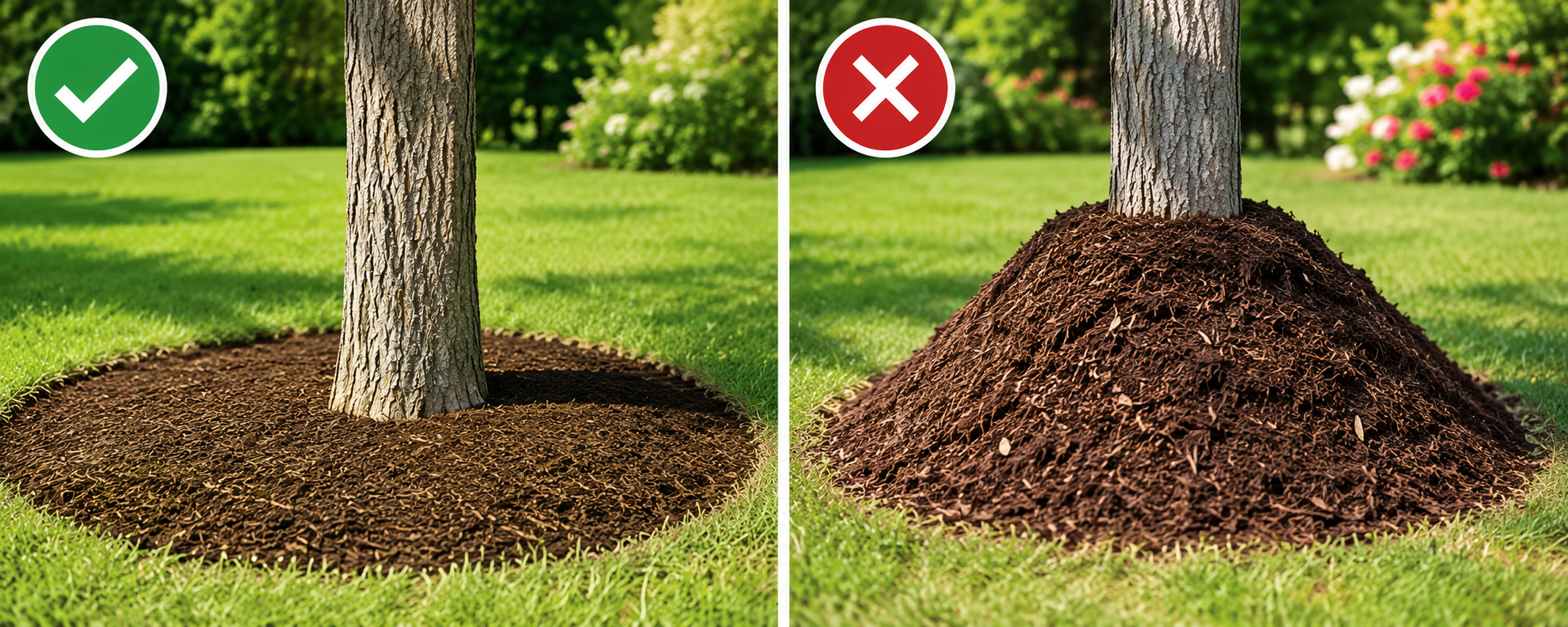
Add Mulch—but Skip the “Mulch Volcano”
Apply a 2- to 3-inch layer of shredded bark or another organic mulch around trees and shrubs. Mulch helps hold moisture, reduce weeds, and moderate soil temperature. Spread it outward in a wide ring, but leave space around trunks and stems. Piling mulch directly against bark can trap moisture and contribute to future health problems.
Pause Pruning and Fertilizing
Major pruning and nitrogen-heavy fertilizer encourage additional growth at a time when the plant is already working hard to conserve water. During extreme heat, remove only dead, damaged, or hazardous branches and save routine shaping and feeding for more suitable weather.
Recognize Heat Stress Early
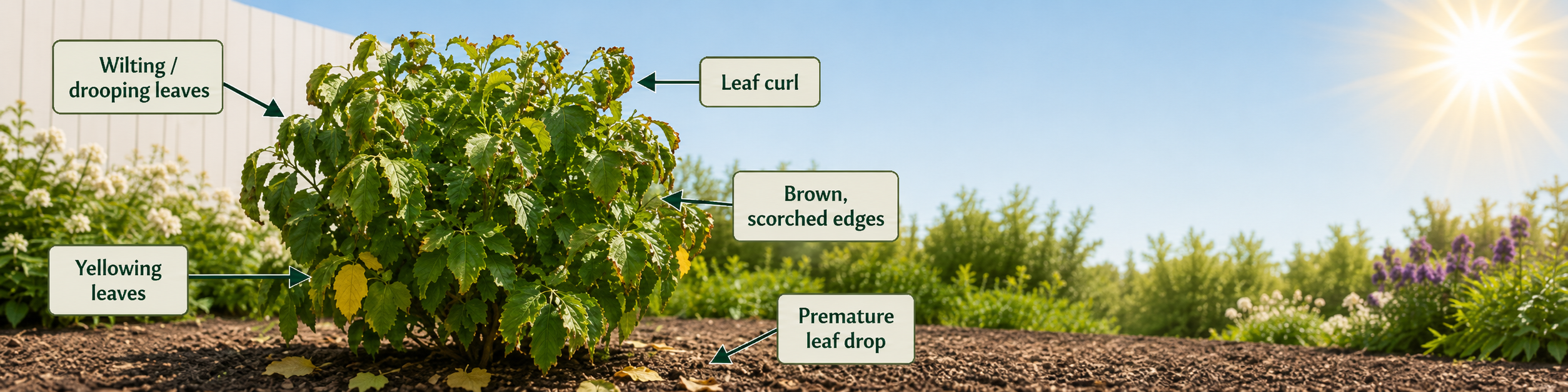
Common signs include wilting, curled leaves, brown or scorched leaf edges, yellowing, and premature leaf drop. Some plants may wilt temporarily during the hottest part of the afternoon and recover in the evening. Check the soil before reaching for the hose so you can tell the difference between a temporary response to heat and genuine moisture stress.
Plan Ahead for Future Summers
Choose trees and shrubs suited to your property’s sunlight, drainage, soil, and available space. The right plant in the right location will be better prepared for both Connecticut winters and increasingly hot summer weather.
A little extra attention during a heat wave can make a major difference. Need help identifying stress or choosing plants for a challenging spot? Stop by Moscarillo’s Garden Shoppe in West Hartford or Torrington. Our team is happy to help you keep your landscape healthy all summer.